ne arıyorsun?

Emici tip susturucuların içinde, delikli çekirdek akustik sistemin sadece bir parçasıdır. Bu çekirdeği çevreleyen malzeme, egzoz gürültüsü, ses kalitesi, termal kararlılık, dolgu ömrü ve susturucunun uzun vadeli durumu üzerinde doğrudan etkiye sahiptir.
Bu malzeme genel olarak şu şekilde bilinir:susturucu dolgusu.
Egzoz tasarımına ve pazara bağlı olarak, aynı parça şu şekilde de tanımlanabilir:susturucu dolgu malzemesi,egzoz susturucu dolgusuSusturucu dolgusu, egzoz dolgu malzemesi, akustik dolgu, susturucu yünü veya egzoz sönümleme malzemesi.
BSTFLEX, motosiklet susturucuları, otomotiv egzoz sistemleri, yarış susturucuları, endüstriyel susturucular, jeneratörler ve diğer egzoz aksamları için yüksek sıcaklığa dayanıklı dolgu malzemeleri tedarik etmekte ve geliştirmektedir.
Ürün yelpazesinin tamamını keşfedin.susturucu dolgu malzemeleri.
Tipik bir emici susturucu, nispeten basit bir düzenek üzerine kuruludur:
Egzoz gazı akışı → delikli boru → koruyucu elyaf tabaka → akustik dolgu → dış kabuk
Egzoz gazları delikli çekirdekten geçer. Akustik enerji deliklerden geçerek çevredeki lifli malzemeye girer.
Sadece odacıklara veya kısıtlayıcı bölmelere güvenmek yerine, dolgu malzemesi bu akustik enerjinin bir kısmını lif yapısı içindeki sürtünme yoluyla çok küçük miktarlarda ısıya dönüştürür.
Sistemin çalışmaya devam edebilmesi için ambalajın şu şekilde kalması gerekir:
termal olarak kararlı,
yeterince dayanıklı,
Egzoz darbesi aşınmasına karşı dayanıklı,
Çekirdeğin etrafına düzgünce paketlenmiş,
ve tekrarlanan ısıtma ve soğutma işlemlerinden sonra bile lif yapısını koruyabilme özelliğine sahiptir.
Bu nedenle, egzoz susturucu dolgu malzemesini yalnızca sıcaklık derecesine göre seçmek nadiren yeterlidir.
Susturucu dolgu malzemesi aynı anda birkaç görevi birden yerine getirir.
Açık lifli yapı, egzoz darbeleri tarafından üretilen ses enerjisini emer. Bu, özellikle gaz akışının delikli bir merkezi borudan geçtiği düz geçişli ve performans susturucularında önemlidir.
Paketleme koşulları yalnızca ses basıncını değil, egzoz sesini de etkileyebilir.
Yeni dolgu malzemesi genellikle daha kontrollü, daha az metalik bir egzoz sesi üretir. Elyaf lifleri bozuldukça, sıkıştıkça, yer değiştirdikçe veya kayboldukça, susturucu belirgin şekilde daha keskin ve daha gürültülü hale gelebilir.
Dolgu tabakası, sıcak delikli boru ile susturucu gövdesi arasında bir ayrım oluşturur.
Susturucu dolgu malzemesi esas olarak akustik bir malzeme olsa da, termal özellikleri gövde sıcaklığını ve bitişik bileşenlerin dayanıklılığını etkiler.
Sağlam dolgu malzemesi, dış gövde üzerindeki doğrudan akustik ve termal yükü azaltır. İyi tasarlanmış bir dolgu sistemi, susturucunun içindeki titreşim kaynaklı bozulmayı da azaltabilir.
Her egzoz sistemi için ideal olan tek bir susturucu dolgu malzemesi yoktur.
Sıcaklık, gaz hızı, motor tipi, beklenen servis aralığı, ses hedefi, susturucu geometrisi ve üretim yöntemi, malzeme seçimini etkileyen faktörlerdir.
Fiberglas, susturucu üretiminde en yaygın kullanılan malzemelerden biri olmaya devam etmektedir.
Düşük hacim yoğunluğunu geniş lif yüzey alanıyla birleştirerek, aşırı ağırlık eklemeden iyi akustik emilim sağlar.
Tipik formlar şunlardır:
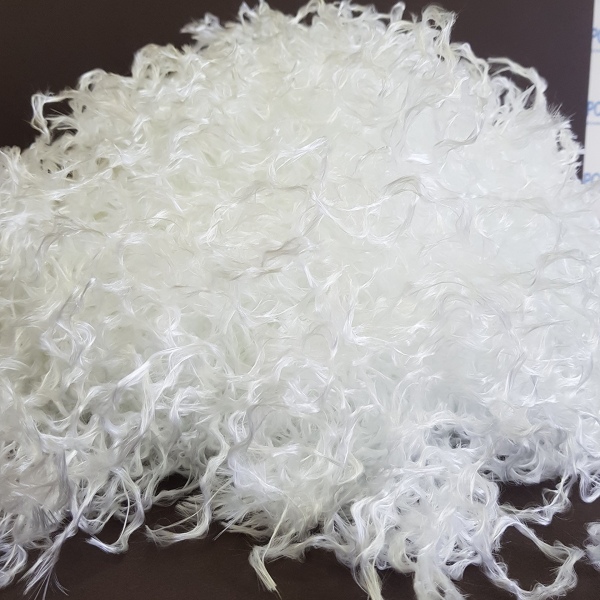
gevşek fiberglas iplik,
sürekli filament cam elyafı,
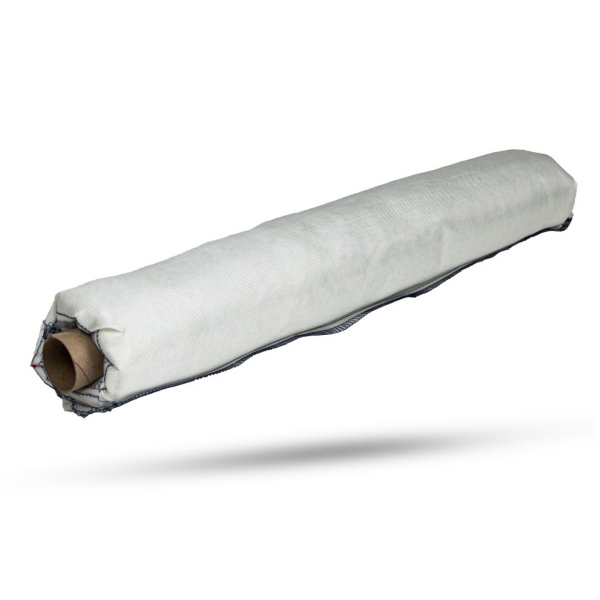
dokulu cam elyafı,
fiberglas paspaslar,
fiberglas ambalaj yastıkları,
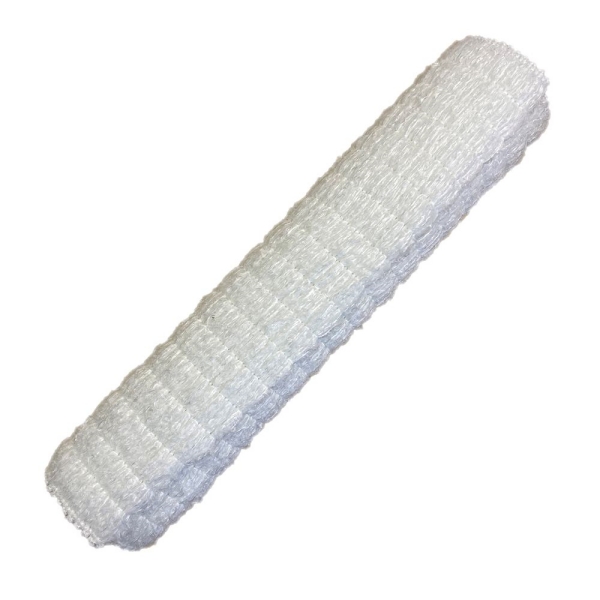
önceden şekillendirilmiş ambalaj çorapları,
ve dokuma cam elyaf torbaların içinde bulunan cam elyafı.
BSTFLEX bir ürün üretmektedir.Dokuma Cam Elyaf Torbalı Fiberglas Susturucu Ambalaj ÇorabıKontrollü kurulum ve elyaf tutma özelliğinin gevşek paketlemeye tercih edildiği uygulamalar için.
Fiberglas dolgu malzemesi genellikle şu amaçlarla tercih edilir:
motosiklet susturucuları,
ATV ve UTV susturucuları,
otomotiv performans egzozları,
yedek susturucular,
yarış egzoz sistemleri,
ve birçok orijinal ekipman üreticisinin ürettiği emici tip susturucular.
Başlıca avantajı, akustik verimlilik, ağırlık, üretilebilirlik ve maliyet arasındaki dengedir.
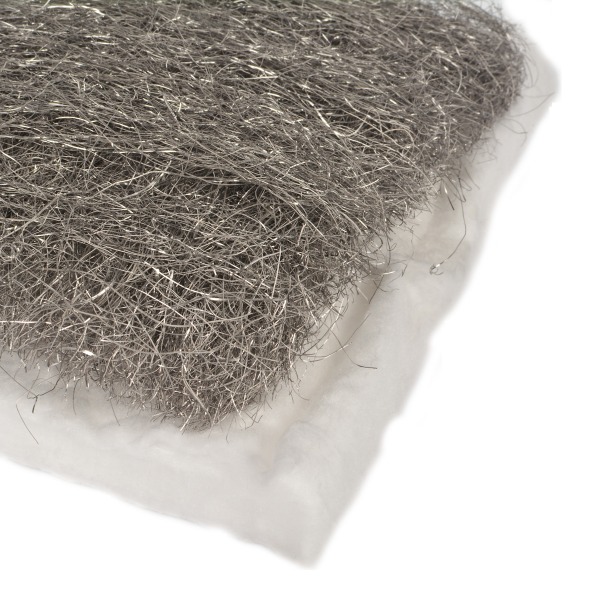
Paslanmaz çelik yünü ise biraz farklı bir işlev görür.
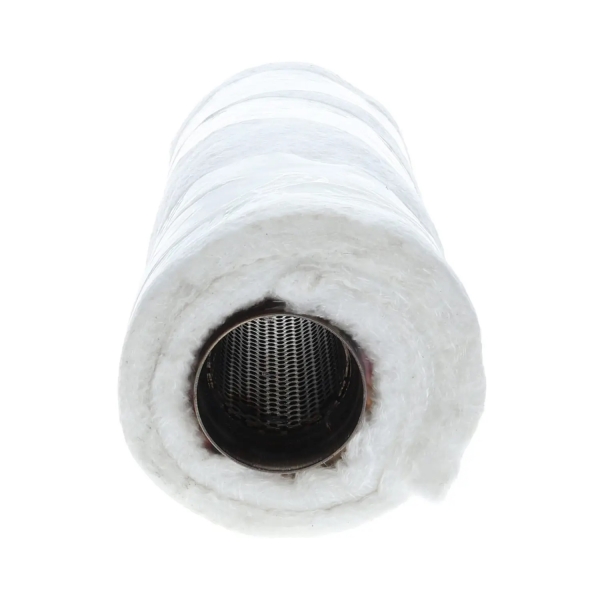
Ambalaj malzemesi olarak kullanılabilir, ancak birçok yüksek performanslı egzoz sisteminde koruyucu bir katman olarak doğrudan delikli borunun etrafına monte edilir.
Tipik düzenleme şu şekilde olur:
Delikli iç kısım → paslanmaz çelik yün → fiberglas dolgu → susturucu gövdesi
Paslanmaz çelik katman, daha yumuşak akustik lifleri şunlardan korumaya yardımcı olur:
çok sıcak egzoz gazları,
yüksek hızlı darbeler,
Deliklerin etrafındaki türbülans,
alev maruziyeti,
ve kademeli lif patlaması.
Bu yapı, özellikle zorlu motosiklet, yarış, turboşarjlı ve yüksek performanslı egzoz sistemlerinde kullanışlıdır.
Bu nedenle, fiberglas ve paslanmaz çelik yünü sanki sadece tek bir malzeme kullanılabilirmiş gibi karşılaştırmak bazen yanıltıcı olabilir. Birçok susturucuda birbirlerini tamamlayıcı işlevler görürler.
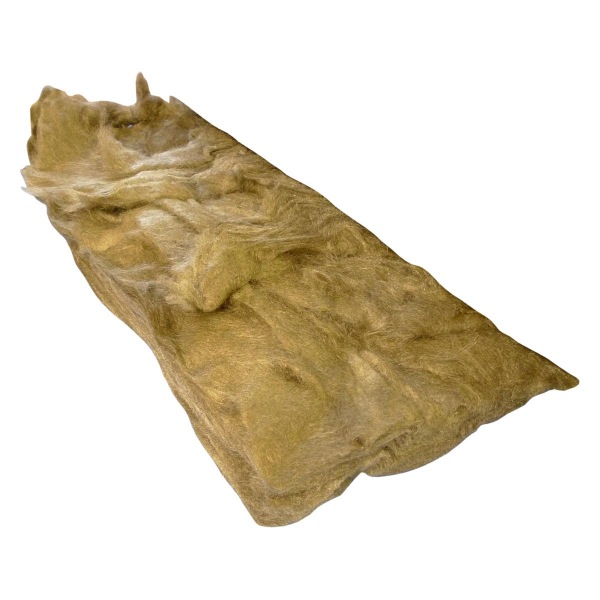
Egzoz sıcaklıklarının alışılmadık derecede yüksek olduğu durumlarda seramik elyaf kullanımı düşünülebilir.
Seramik elyaf susturucu dolgu malzemesi, yüksek sıcaklık dayanımı ve nispeten düşük ısı iletkenliği nedeniyle cazip bir malzemedir.
Olası uygulama alanları şunlardır:
high-temperature industrial silencers,
heavy-duty engine exhaust systems,
certain generator exhaust assemblies,
thermal-intensive exhaust equipment,
and special mufflers operating beyond the practical range of conventional glass fiber.
However, the highest temperature material is not automatically the best acoustic material.
Density, fiber diameter, resilience, vibration resistance, handling requirements, and long-term fiber stability must also be evaluated.
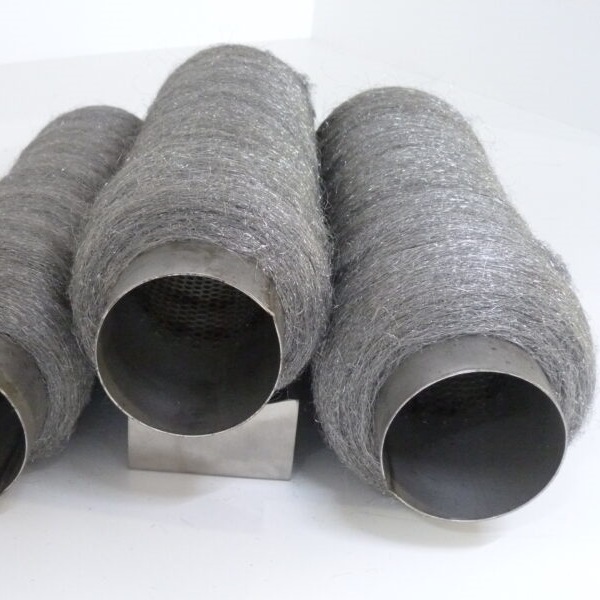
Basalt fiber provides another option between conventional glass fiber and more specialized high-temperature materials.
Produced from volcanic basalt rock, continuous basalt fibers can provide:
good thermal resistance,
mechanical stability,
chemical resistance,
vibration resistance,
and useful acoustic performance.
Basalt muffler packing can therefore be considered for automotive, motorcycle, heavy-duty, or industrial exhaust systems where designers want a mineral-fiber solution with elevated thermal capability.
| Packing Material | Primary Strength | Typical Position | Suitable Applications |
|---|---|---|---|
| Fiberglass | Efficient acoustic absorption | Main packing layer | Motorcycle, automotive, performance exhaust |
| Stainless Steel Wool | Heat and erosion protection | Around perforated core or as metallic packing | Racing, turbo, high gas velocity exhaust |
| Ceramic Fiber | Extreme-temperature capability | Main or supplementary insulation layer | Industrial and severe-temperature silencers |
| Basalt Fiber | Thermal and mechanical durability | Main acoustic packing layer | Heavy-duty, automotive and industrial exhaust |
The correct construction may combine two or more materials rather than using a single fiber throughout the silencer.
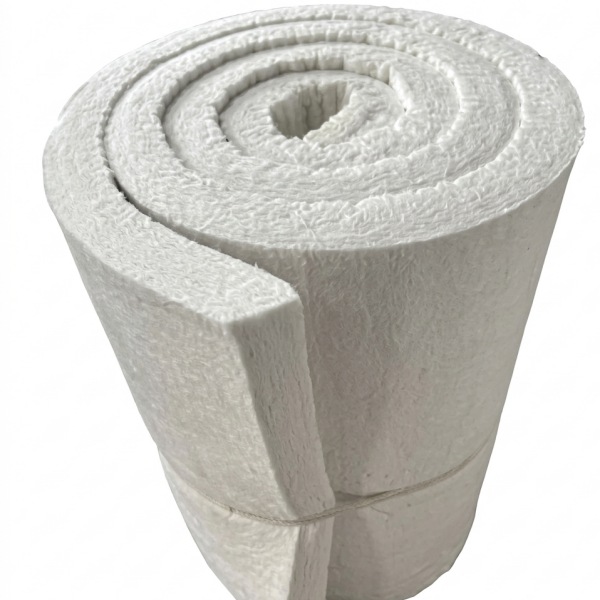
Two mufflers using exactly the same fiber can perform differently simply because the material was installed at different densities.
This is one of the most overlooked aspects of exhaust muffler packing.
If the fiber mass is insufficient, several problems can develop:
reduced acoustic absorption,
rapid fiber movement,
localized empty areas,
increased exhaust noise,
accelerated blowout.
The fibers may also redistribute under vibration and exhaust pulsation.
Over-compression creates another set of problems.
When fibrous material is compressed excessively, the void structure needed for acoustic energy dissipation changes.
The result can be:
poorer sound absorption in certain frequency ranges,
increased silencer weight,
difficult assembly,
reduced fiber resilience,
and unnecessary material consumption.
The goal is therefore not to put the maximum possible amount of packing inside the muffler.
The objective is to achieve a controlled and repeatable packing density suitable for the muffler geometry and target acoustic performance.
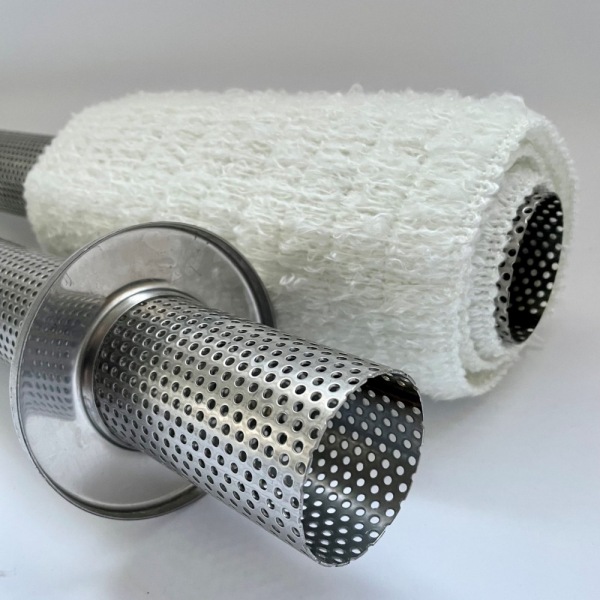
Muffler packing works in one of the harshest environments on a vehicle.
The material may experience thousands of heating and cooling cycles together with vibration and rapidly fluctuating exhaust pressure.
Several deterioration mechanisms can occur.
High-velocity exhaust gases passing through perforations gradually attack exposed fibers.
This is often called fiber blowout.
Continuous exposure to elevated temperature can reduce fiber resilience and alter the packing structure.
Vibration can cause loose packing to migrate or compact.
The silencer may develop areas with insufficient material even when the total amount of packing originally installed was correct.
Condensation, oil residue, incomplete combustion products, and other deposits can affect the condition of the acoustic fibers.
A theoretically suitable material may still fail prematurely if it is packed unevenly or installed at the wrong density.
Muffler packing deterioration is not always visible from outside the silencer.
Several operating changes can indicate that the material should be inspected.
Common signs include:
A noticeable increase in exhaust volume
The muffler gradually becomes louder because the effective acoustic mass has decreased.
A sharper or metallic exhaust note
When the packing layer becomes thin, sound energy interacts more directly with the metal shell.
Fibers coming from the tailpipe
Visible strands or particles at the outlet may indicate packing migration or blowout.
Hot spots on the muffler casing
Loss or movement of the internal packing can create uneven thermal distribution.
Rattling or internal movement
This can indicate loose material or deterioration of internal components.
Motorcycle silencers place especially high demands on packing material because the available volume is limited while exhaust temperatures and pulse velocity can be high.
For this reason, motorcycle exhaust packing normally needs to combine:
strong acoustic absorption,
low weight,
good thermal stability,
resistance to vibration,
easy repacking,
and controlled fiber retention.
Both two-stroke and four-stroke engines use packed silencers, but their operating environments differ considerably.
Two-stroke exhaust packing can be affected heavily by oil, combustion residue, and frequent repacking cycles.
Four-stroke performance exhausts may expose the material to higher sustained temperatures and aggressive exhaust pulses.
Selecting packing purely by motorcycle type is therefore insufficient. Muffler construction and engine operating conditions should also be considered.
Performance exhaust manufacturers often need to reduce sound without introducing excessive backpressure.
Straight-through absorption mufflers are useful in this situation because the exhaust path remains relatively open.
The acoustic packing surrounding the perforated core becomes a critical component.
Depending on the application, manufacturers may specify:
continuous fiberglass packing,
stainless steel wool core protection,
composite stainless/fiberglass systems,
basalt fiber,
or specialized high-temperature fibers.
For racing exhaust systems, packing retention becomes particularly important because high gas velocities can rapidly damage exposed loose fibers.
Industrial silencers operate under a different set of requirements.
Applications can include:
diesel generators,
gas engines,
compressors,
turbines,
exhaust treatment equipment,
heavy machinery,
power generation systems,
and industrial ventilation or acoustic control systems.
In these installations, designers may prioritize:
continuous operating temperature,
acoustic absorption over a specified frequency range,
long maintenance intervals,
fiber stability,
corrosion resistance,
and repeatable packing density.
Industrial buyers therefore often purchase muffler packing by engineering specification rather than simply selecting a consumer repacking kit.
Manufacturers normally have several ways to introduce fiber into a silencer.
Loose fibers or strands allow considerable flexibility during assembly.
They work well where the muffler geometry varies or packing is performed manually.
The challenge is maintaining consistent density from one muffler to another.
Mats provide more predictable thickness and make material handling easier during production.
They are especially suitable when the silencer has a regular cylindrical geometry.
A measured amount of fiber is enclosed inside a lightweight retaining fabric or mesh.
This allows manufacturers to control fiber mass before installation.
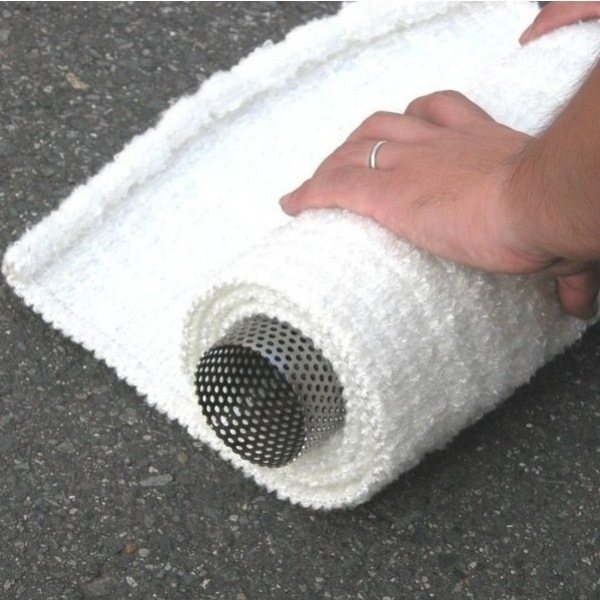
A tubular packing assembly can be fitted around the perforated core, reducing installation time and helping maintain circumferential coverage.
BSTFLEX develops customized packing formats including fiberglass-based assemblies for OEM exhaust production.
A purchase specification should contain more information than simply:
“Fiberglass muffler packing.”
For repeatable production, buyers should consider supplying:
| Specification Item | Why It Matters |
|---|---|
| Fiber material | Determines thermal and mechanical behavior |
| Silencer internal diameter | Defines available packing space |
| Perforated core diameter | Determines required packing thickness |
| Muffler length | Determines fiber quantity |
| Target packing density | Influences acoustic performance |
| Continuous exhaust temperature | Determines material suitability |
| Peak temperature | Identifies short-duration thermal exposure |
| Engine type | Helps evaluate exhaust environment |
| Packing format | Loose fiber, mat, pillow, sock or custom assembly |
| Annual quantity | Determines manufacturing and packaging method |
When these parameters are available, the packing can be engineered around the silencer rather than supplied as a generic bulk fiber.
Manual loose packing creates several variables.
One operator may install more material than another. Distribution around the perforated tube may also vary.
Preformed systems reduce this variability.
A packing sock, bag, pillow, or measured mat can provide:
defined material weight,
more uniform circumferential distribution,
reduced fiber handling,
shorter assembly time,
cleaner production,
improved batch repeatability.
For medium- and high-volume exhaust manufacturing, those manufacturing benefits can be as important as the thermal properties of the fiber itself.
A practical starting point is to identify the dominant failure risk.
Consider fiberglass as the primary acoustic layer.
Consider a stainless steel wool or metallic mesh protection layer before the main fiber packing.
Evaluate ceramic or other elevated-temperature fibers.
Consider materials and packing forms with stronger dimensional stability and controlled retention.
Consider preformed socks, pillows, mats, or custom packing assemblies rather than uncontrolled loose fill.
BSTFLEX manufactures high-temperature thermal and acoustic materials for exhaust systems and can support both replacement packing and OEM silencer production.
Available development options can include:
fiberglass muffler packing,
glass fiber silencer packing,
stainless steel wool packing,
ceramic fiber packing,
basalt-based packing,
loose fiber,
mats,
rolls,
packing bags,
packing pillows,
tubular packing socks,
and customized preformed assemblies.
Sizes, packing weight, fiber combination, retaining construction, and packaging can be developed according to customer drawings, samples, or silencer dimensions.
For applications requiring easier assembly and improved fiber containment, see theFiberglass Muffler Packing Sock with Woven Glass Mesh Bag.
For additional material options, visit theBSTFLEX Muffler Packing category.
There is no universal best material. Fiberglass is widely used because of its acoustic efficiency and weight, stainless steel wool is effective for protecting packing near the perforated core, while ceramic and basalt fibers may be selected where higher temperature capability is required.
Yes. Fiberglass is one of the most common acoustic materials used in absorption-type exhaust silencers because its fibrous structure provides efficient sound absorption while remaining relatively lightweight.
It can be used alone in some designs, but stainless steel wool and fiberglass often perform different functions. Stainless steel wool can protect the inner packing from exhaust erosion, while fiberglass provides the principal acoustic absorption layer.
Packing can escape because of fiber erosion, excessive gas velocity, damaged retaining mesh, incorrect packing density, thermal degradation, or deterioration around the perforated core.
Not necessarily. Excessive compression can reduce the open fiber structure needed for effective acoustic absorption. Packing density should be controlled rather than maximized.
There is no fixed interval for every exhaust system. Replacement frequency depends on exhaust temperature, engine type, riding conditions, packing material, gas velocity, silencer design, and operating hours.
Evet. OEM ambalajı, çekirdek çapına, gövde çapına, susturucu uzunluğuna, hedef ambalaj ağırlığına, malzeme özelliklerine, sıcaklık gereksinimlerine ve tercih edilen montaj formatına göre temin edilebilir.
Egzoz tasarımında genellikle en çok dikkat çeken kısım, görünür susturucu gövdesidir; ancak bu gövde ile delikli iç kısım arasında gizli olan malzeme, susturucunun akustik davranışının önemli bir bölümünü belirler.
doğru şekilde tasarlanmışsusturucu dolgu malzemesiSadece sıcağa dayanmakla yetinmemelidir.
Elyaf yapısı, yoğunluğu, akustik emilimi, aşınma direnci ve montaj tutarlılığı arasında doğru bir ilişki korunmalıdır.
Standart motosiklet ve otomobil susturucuları için fiberglas, en çok yönlü seçeneklerden biri olmaya devam etmektedir. Zorlu egzoz ortamları için paslanmaz çelik yünü, seramik elyaf, bazalt elyaf veya çok katmanlı kombinasyonlar kullanım ömrünü uzatabilir.
OEM egzoz üreticileri için bir sonraki adım, sadece bir elyaf seçmekten ibaret değil.
Doğru olanı tanımlıyor.egzoz susturucu dolgu sistemiSusturucu geometrisi, egzoz sıcaklığı, akustik hedef ve üretim yöntemi için.
BSTFLEX, motosiklet, otomotiv, yarış, jeneratör, denizcilik ve endüstriyel egzoz sistemleri için susturucu dolgu malzemeleri üretebilir ve özelleştirebilir.
Susturucu ölçülerinizi, çalışma sıcaklığınızı, gerekli dolgu formatınızı ve yıllık miktarınızı belirterek malzeme seçimi ve numune geliştirme için BSTFLEX ile iletişime geçin.

No.10, Chuangxin North Road, Nanshan Park, Ningguo Economic and Technological Development Zone, Ningguo City, Anhui Province, China
tel/Whatsapp : 0086-15856303740
e-posta : sales@bstbraidedsleeve.com
Skype : vanesa-cheng