ne arıyorsun?

The thermal material is only one part of an automotive wire harness heat protection system. The sleeve must also be practical to install around the actual harness.
A simple tubular sleeve may be ideal when the harness is still being assembled, but it can become difficult or impossible to install after large connectors, branch points, clips and terminals are fitted. In those situations, a wrap-around heat protection sleeve, hook-and-loop construction, snap closure or self-closing sleeve can provide a more practical solution.
Choosing between slide-on and wrap-around designs therefore depends on the harness assembly sequence, connector geometry, service requirements, production volume and thermal environment.
BSTFLEX manufactures multiple aluminized heat protective sleeves for automotive wire harnesses, hoses, cables and fluid lines, including tubular and removable constructions.
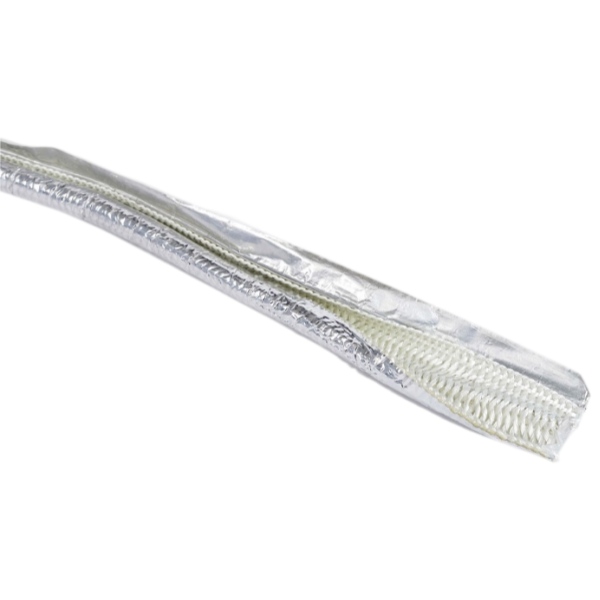
A slide-on heat protection sleeve is a continuous tubular sleeve installed by passing the wire harness, cable or hose through the inside of the sleeve.
This construction is generally the simplest option when the protective sleeve can be installed before the harness is completely assembled.
Typical slide-on designs include:
Slide-on designs normally provide continuous coverage around the protected component without an opening seam or external closure system.
A slide-on sleeve is usually preferred when the harness production sequence allows it to be installed before large connectors or terminals are fitted.
Typical conditions include:
For high-volume production, a tubular construction can also simplify the bill of materials because there is no additional hook-and-loop strip, snap fastener or overlapping closure.
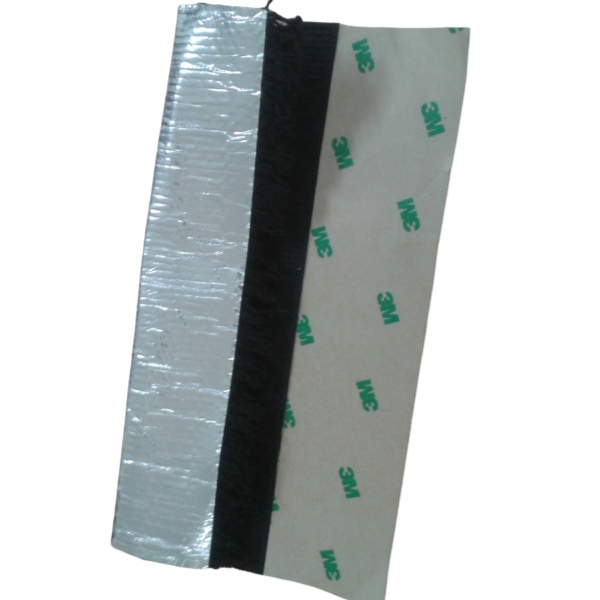
A tubular sleeve surrounds the harness continuously. There is no open seam that needs to be oriented away from the heat source.
Without hook-and-loop fasteners or overlapping edges, a slide-on sleeve can often maintain a relatively compact finished profile.
The absence of a closure system can reduce the number of components and assembly features in the finished part.
When thermal protection is planned at the beginning of the harness design, a tubular sleeve can be integrated into the normal assembly sequence.
The biggest limitation is installation.
If a wire harness already has connectors, molded terminals, mounting clips or large branch points, these components may not pass through the sleeve.
A tubular sleeve can also be inconvenient where the protected section is located in the middle of an existing harness and the harness cannot be disconnected.
In these cases, increasing the sleeve diameter enough to pass over the connectors may create an excessively loose fit around the normal cable bundle.
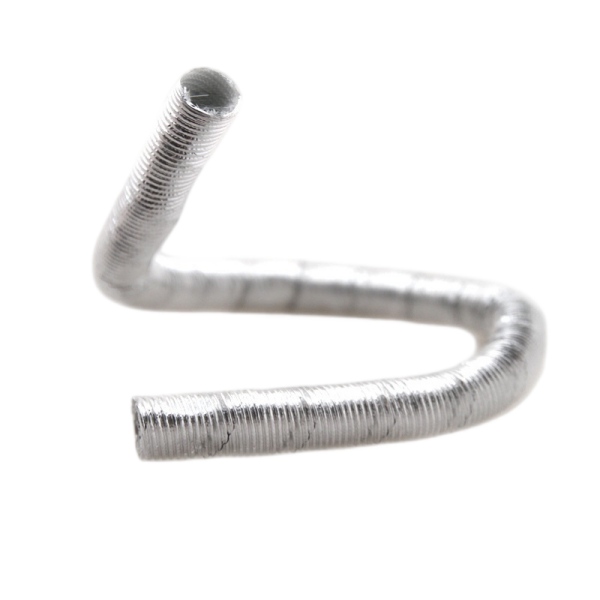
A wrap-around sleeve is installed by opening the sleeve, placing it around the wire harness or hose and then closing it along the longitudinal seam.
This allows the thermal shield to be fitted to an already assembled component without passing connectors through a tube.
Wrap-around constructions may use:
These designs are particularly useful for retrofit work, completed wiring harnesses and vehicle assemblies that require future service access.
A wrap-around design should be considered when:
For these applications, a removable sleeve can significantly simplify installation compared with disassembling the electrical system.
A hook-and-loop sleeve is one of the most common removable thermal protection designs.
The sleeve opens along its length, wraps around the wire harness and is secured by a high-temperature hook-and-loop closure.
This type of construction is useful where:
BSTFLEX offers Heat Shroud Aluminized Sleeving with Hook-and-Loop Closure for wire, cable and hose applications exposed to radiant heat.
Snap fasteners provide a defined mechanical closure that can be useful in repeatable OEM installations.
Compared with a hook-and-loop seam, snaps create fixed closure points along the sleeve.
This type of design can be appropriate when:
The spacing and number of snap fasteners should be matched to the sleeve length, diameter and required seam stability.
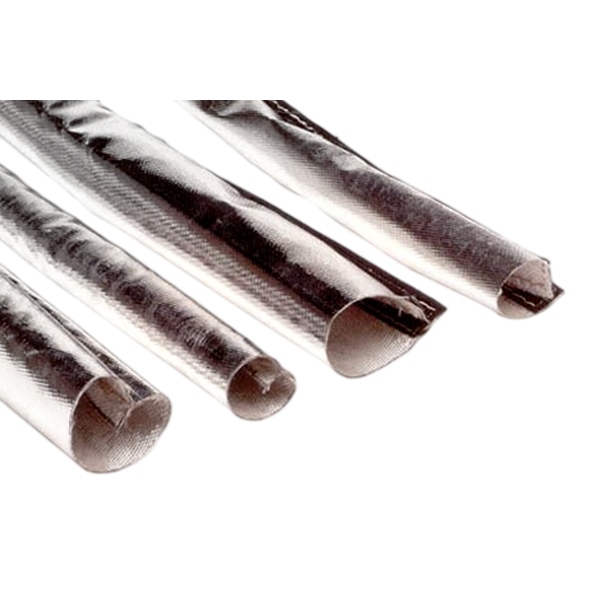
A self-closing sleeve uses overlapping edges or a preformed structure that naturally closes around the harness after installation.
The installer opens the sleeve, places the cable bundle inside and allows the sleeve to return around the component.
This can reduce installation steps because no separate hook-and-loop strip or individual snaps need to be secured.
A self-closing design can be suitable for:
| Design Factor | Slide-On Sleeve | Wrap-Around Sleeve |
|---|---|---|
| Installation Timing | Best before connectors are installed | Can be installed after harness assembly |
| Large Connectors | May prevent installation | Usually not a problem |
| Retrofit Use | Limited | Very suitable |
| Continuous Coverage | Yes | Includes longitudinal closure |
| Outside Diameter | Usually more compact | May be larger at closure |
| Service Access | Usually requires sleeve removal from end | Can often be opened locally |
| Assembly Speed | Fast if integrated into harness production | Fast for completed harnesses |
| Closure Components | Normally none | Hook-and-loop, snaps or self-closing structure |
| Complex Harness Geometry | More difficult | More adaptable |
Yes, closure design can influence the overall thermal protection system.
A tubular sleeve provides uninterrupted circumferential coverage, while a wrap-around construction includes a longitudinal seam. The seam position should therefore be considered relative to the heat source.
Where possible, the closure should not create an unnecessary opening directly facing the highest radiant heat source.
Overlap width, closure stability and sleeve fit can all affect how well the protective layer remains positioned around the harness.
For an aluminized reflective sleeve, the reflective surface should remain exposed toward the external radiant heat source.
Installation should avoid:
The correct installation position can be as important as the material specification.
Reflective thermal protection works differently from thick insulation.
An aluminized surface is especially useful for reducing radiant heat. Where the installation permits, maintaining separation between the heat source, sleeve and protected harness can improve the overall thermal arrangement.
If the sleeve is pressed directly against a very hot component, conductive heat becomes more important and the application may require a different or additional insulation system.
Both slide-on and wrap-around sleeves need appropriate dimensional allowance.
The specification should consider:
A sleeve that is too tight can restrict harness movement and make assembly difficult.
A sleeve that is too loose can shift, interfere with nearby components or expose part of the wiring to heat.
Connector geometry is one of the fastest ways to determine whether a slide-on construction is practical.
For example, a harness may have a normal bundle diameter of 18 mm but a connector body measuring 45 mm across. A tubular sleeve sized to fit the 18 mm harness cannot pass over the connector, while a sleeve sized for the connector may be unnecessarily oversized along the rest of the harness.
In this case, a wrap-around construction usually provides a more controlled fit.
Wire harnesses often divide into two or more branches.
A standard tubular sleeve can protect the main trunk, but the breakout point may require:
For complex three-dimensional geometry, a conventional sleeve may no longer be the most efficient solution.
BSTFLEX can also manufacture custom-shaped aluminized fiberglass automotive heat shields for irregular harness and component geometries.
The best sleeve for prototype testing is not always the best design for an automotive assembly line.
For production programs, engineers should also evaluate:
A slightly more complex sleeve construction may reduce total assembly time if it allows installation after the harness is completed.
Retrofit thermal protection presents a different problem from OEM harness production.
The vehicle is already assembled and the protected harness may be difficult to disconnect without removing multiple components.
For this reason, retrofit applications commonly favor:
The ability to install the heat sleeve without disconnecting wires, cables or hoses can significantly reduce service labor.
| Application | Recommended Starting Point |
|---|---|
| New wire harness before connector installation | Slide-on tubular heat sleeve |
| Finished harness with large connectors | Wrap-around sleeve |
| Harness requiring repeated inspection | Hook-and-loop sleeve |
| OEM assembly requiring defined mechanical closure | Snap-closure sleeve |
| Fast installation around cable bundles | Self-closing sleeve |
| Irregular branch or connector geometry | Custom-shaped heat shield |
| High radiant heat near exhaust | Aluminized reflective construction |
Transmission wire harnesses are a good example of why installation design matters.
If the protective sleeve is installed during harness production before all connectors are fitted, a tubular construction may be practical.
If thermal protection is added after the harness is completed, the connector geometry may require a removable sleeve.
For more detailed engineering considerations, see Transmission Wire Harness Heat Protection Sleeve: Design and Thermal Requirements.
Installation construction does not replace proper material selection.
A slide-on sleeve and wrap-around sleeve can both be manufactured from different thermal materials.
Depending on the application, options can include:
For applications dominated by radiant exhaust heat, aluminized constructions are particularly useful because the reflective outer surface helps reduce radiant energy reaching the harness.
When requesting a custom removable sleeve, provide:
Photographs of the installed harness are particularly useful for retrofit applications because they show available clearance and obstacles around the component.
BSTFLEX manufactures slide-on, sewn, wrap-around, hook-and-loop, snap-closure and self-closing thermal protection components for automotive wire harnesses, cables, hoses and fluid lines.
Applications range from standard reflective sleeve supply to custom OEM components developed around specific harness dimensions, connectors, branches and installation requirements.
For a broader overview of automotive harness thermal protection materials and designs, see Automotive Wire Harness Heat Protection Sleeves: Materials, Designs and Applications.
For reflective sleeve options, view the BSTFLEX Aluminized Heat Protective Sleeve category.
A slide-on sleeve is a continuous tube that must pass over the wire harness or cable. A wrap-around sleeve opens along its length and can be installed around an already assembled component.
A wrap-around, hook-and-loop, snap-closure or self-closing sleeve is normally more practical when connectors are already installed and the harness cannot be disconnected.
A tubular sleeve provides continuous coverage without a longitudinal closure, but actual thermal performance depends on material, sleeve construction, fit, air gap, heat-source temperature and installation. Sleeve type should not be selected from the closure method alone.
Yes. Wrap-around designs are specifically useful where wiring, hoses or cables need thermal protection without disconnecting the existing assembly.
It is commonly used for completed wire harnesses, cables and hoses that require removable or retrofit thermal protection. The sleeve can be opened, wrapped around the component and closed along its length.
A self-closing sleeve opens to accept the wire bundle and then closes around it through an overlapping or preformed structure. It can provide faster installation without a separate hook-and-loop closure.
Yes. Sleeve diameter, flat width, cut length, material construction, closure system, insulation layers and other dimensions can be produced according to the component and customer specification.
Where radiant heat from the exhaust manifold is the main problem, an aluminized reflective construction is often a suitable starting point. Final selection should consider heat-source temperature, clearance, required harness temperature and whether direct contact can occur.
etiketler :

No.10, Chuangxin North Road, Nanshan Park, Ningguo Economic and Technological Development Zone, Ningguo City, Anhui Province, China
tel/Whatsapp : 0086-15856303740
e-posta : sales@bstbraidedsleeve.com
Skype : vanesa-cheng