ne arıyorsun?

Fiberglass exhaust packing can reach a silencer assembly line as yarn-based material, a cut mat or loose filling. The right choice starts with what the factory needs to receive: fiber for an established filling process, a sheet for wrapping around a core, or a defined charge for placement into an open chamber.
These descriptions overlap. Yarn describes how glass filaments are organized; mat and loose fill describe supplied forms. A continuous glass yarn can be processed into a mat, incorporated into a contained component or used as feedstock for a compatible filling system. Comparing the names alone misses those differences.
BSTFLEX offers fiberglass exhaust muffler packing alongside mat, loose-fill and E-glass product options. This guide explains what to specify for each route when purchasing acoustic filling for a perforated-core silencer.
| Supply Route | When to Evaluate It | Specification That Makes the Quote Useful |
|---|---|---|
| Yarn-based or continuous-strand packing | Your process feeds, winds, opens or forms a defined glass-fiber material. | Fiber grade, yarn construction, processing condition, linear density where applicable, package format and delivered charge. |
| Fiberglass packing mat or sheet | Your assembly uses a repeatable cut pattern around the core or within an open shell. | Material construction, areal weight, thickness under agreed measurement conditions, cut dimensions and any binder or stitching. |
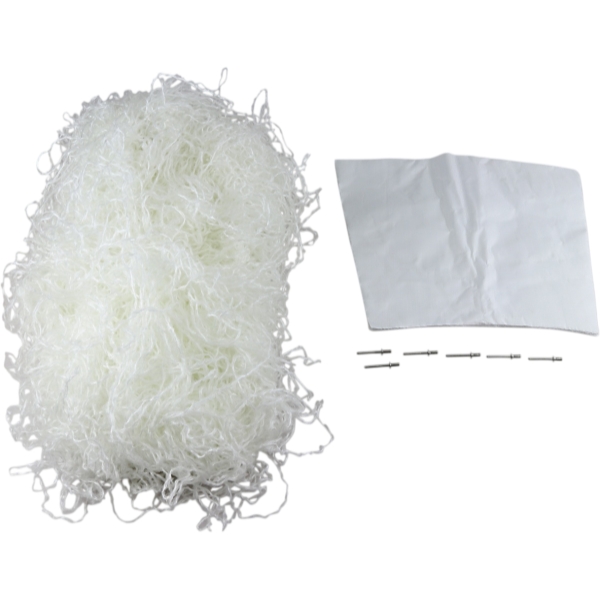
| Loose fill fiberglass packing | Your process measures and distributes the charge within accessible packing zones. | Fiber grade and length characteristics, supplied condition, dry charge per silencer and the filling method. |
For a first sample, describe the preparation still performed at your factory. A supplier needs to know whether material will be placed directly into the chamber or processed further before installation. A kilogram of feedstock and a kilogram of assembly-ready filling are not necessarily equivalent purchases.
Glass grade, fiber construction and supplied form are separate fields. E-glass identifies a glass family; continuous filament describes fiber continuity; texturized describes a bulked yarn structure. None of these terms, by itself, defines a finished packing component.
The BSTFLEX E-glass exhaust silencer packing page provides a starting product for a glass-grade-specific inquiry. Add the required supply form, filling quantity and operating conditions rather than treating E-glass as a fourth format alongside yarn, mat and loose fill.
The expressions fiberglass exhaust packing, fibreglass exhaust packing and glass fiber silencer packing may refer to the same general material family. Confirm equivalence through the material reference and specification, not the regional spelling.
For glass fiber yarn muffler packing, first establish whether the product is already bulked for placement or requires further opening, texturizing or forming. The BSTFLEX yarn-based exhaust packing product uses continuous-filament glass material, but the precise supplied condition should be agreed for the customer's process.
Where yarn is fed from a package, include the package dimensions, usable net mass and pay-off requirements in the trial. Ask for linear density and its measurement basis where relevant. Also identify any sizing or surface treatment that forms part of the supplied material.
For machine processing, specify the compatible feedstock rather than assuming that any fiberglass yarn will run through the equipment. Continuous-glass-fiber direct-filling systems exist, but their feedstock and processing requirements are specific. Material intended for another textile or composite process is not automatically an approved substitute.
Where the material is already prepared for hand placement, focus instead on the dry charge and its distribution. Do not wind it into a dense cord merely because it is described as yarn. Its final arrangement must match the approved acoustic filling design.
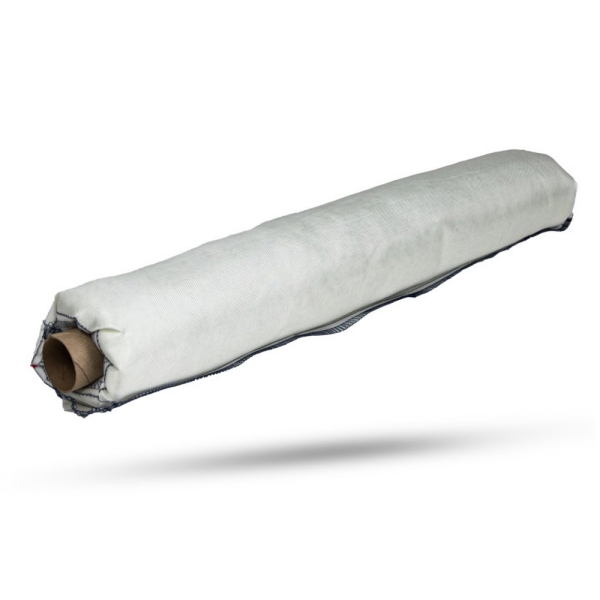
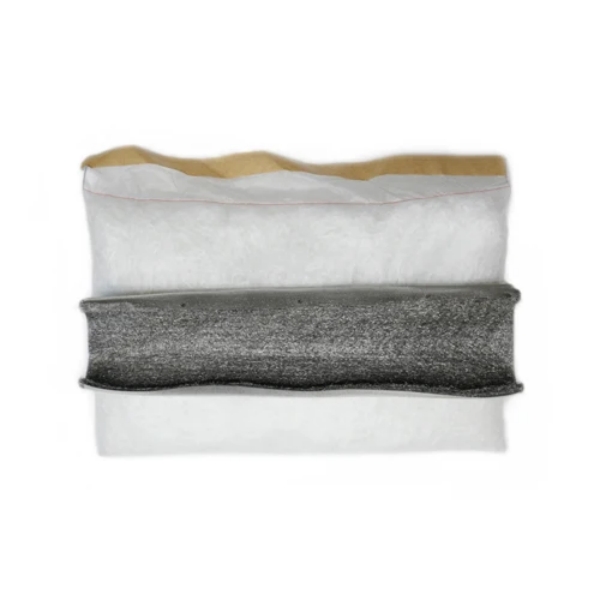
A fiberglass muffler packing mat provides a sheet-form route that can be cut to a repeatable pattern. For example, BSTFLEX fiberglass silencer mat packing is a separate product option from loose filling. Buyers can also review the existing fiberglass exhaust muffler packing product and specify the required sheet construction and dimensions in the inquiry.
Compare areal weight together with thickness. Two pieces with the same length, width and nominal thickness can contain different quantities of glass fiber. A thickness measurement is also incomplete without knowing whether the material was relaxed or measured under a defined load.
Ask how the sheet holds together: mechanical entanglement, stitching, binder or another specified method. Identify whether the stated areal weight covers glass fiber alone or the complete sheet. Where a binder or thread is present, include its intended behavior in the material review.
A conventional mat is not automatically a self-expanding sheet. Keep the separate release and installation requirements of an expanding exhaust packing sheet with that construction rather than applying them to every fiberglass mat.
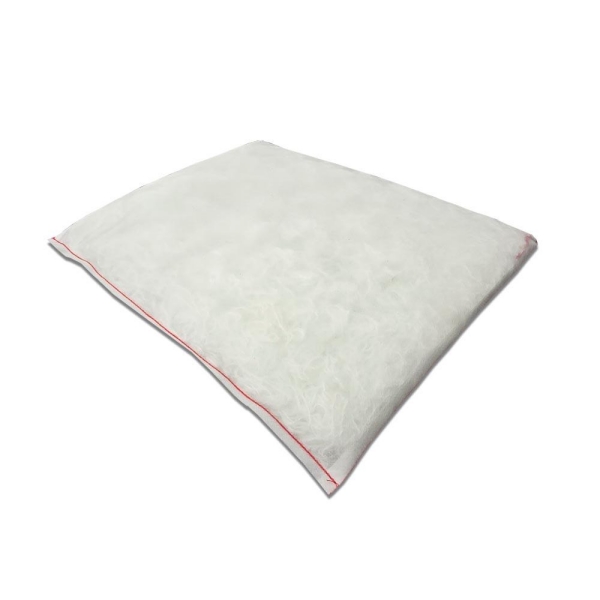
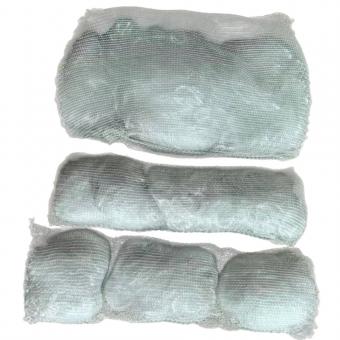
Fiberglass loose fill exhaust muffler packing is an option for manufacturers that control filling at their own assembly station. Define the material condition and the measured quantity for each silencer before comparing bulk package prices.
The word loose does not establish whether the fiber is chopped, continuous or supplied in another prepared arrangement. Request that information explicitly. It also does not establish suitability for a filling machine; prepared loose fiber and roving processed through a nozzle are different supply situations.
For manual filling, a pre-weighed charge and a zone-by-zone placement instruction provide a clear production reference. For metered filling, verify the quantity delivered into the component rather than relying only on material withdrawn from the supply package.
Keep separate records for package net weight, installed charge and handling loss. A supplier's bag size is an inventory unit, not the amount to put into one muffler.
Three measurements can appear in a fiberglass muffler packing material quotation. They describe different quantities and should remain separate on the specification.
| Measurement | Meaning | What It Does Not Establish |
|---|---|---|
| Yarn linear density, commonly expressed in tex | Mass per unit length of the specified yarn; one tex equals one gram per 1,000 meters. | The bulk volume or acoustic performance after opening and installation. |
| Mat areal weight, commonly expressed in g/m2 | Mass per unit area, on the stated fiber-only or complete-sheet basis. | The final packing density unless the installed volume and material quantity are also known. |
| Installed fiber density, commonly expressed in kg/m3 | The dry acoustic-fiber mass divided by the net volume assigned to that fiber. | Uniform distribution or equivalent performance between different fiber constructions. |
Use these quantities to check a quotation, not to invent a universal filling recommendation. A yarn length, mat area or loose charge must ultimately deliver the approved amount of the selected material to the intended region of the silencer.
For a perforated-core absorption section, identify the internal shell profile, core outside dimensions and effective packed length. Mark the perforated area, closed tube sections, end spaces and partitions so the supplier can distinguish the acoustic filling region from other internal space.
Keep the main gas passage clear. The fiber belongs in the specified packing region, not inside the core bore. Where the design includes a core-side metallic layer or an outer retainer, show its position and installed dimensions separately.
A nominal average density cannot reveal an empty end pocket or an overfilled narrow side of an offset core. Give each separate zone a placement requirement and inspect the trial assembly against that layout. Changing from mat to loose fill, or from prepared yarn to mat, should preserve the required coverage rather than only the total weight.
When comparing two supply routes, identify everything that changes. A different glass grade, filament size, binder, fiber quantity or retaining layer makes the trial more than a comparison of packaging formats.
Keep the shell, core and test conditions consistent where the objective is to compare supply forms. Record the selected fiber charge and installed distribution, then evaluate sound and retention under the agreed operating trial. Neither a thicker mat nor a longer filament guarantees a quieter finished silencer.
For thermal review, state continuous and peak conditions with the measurement location. Exhaust-gas temperature, packing temperature and external shell temperature are not interchangeable. Select the proposed grade for the actual duty rather than applying one temperature limit to all fiberglass products.
Use the safety information for the supplied material and the site's handling procedure. Request any conditioning instructions for binders or stitching before evaluating the finished exhaust. Sample acceptance should identify what was tested, not just record that fiberglass was used.
A project may begin with a raw-material inquiry but require a finished charge that keeps its shape during insertion. In that case, discuss a contained component instead of leaving every preparation step at the assembly station.
The BSTFLEX fiberglass muffler packing sock combines glass-fiber yarn filling with woven glass mesh containment. Specify the fiber weight, cover, component dimensions and installation fit separately. The mesh adds a defined handling structure; it does not remove the need to approve the filling material.
Provide the silencer cross-section, the existing material reference or unused sample, and the process used to install the packing. Add the approved dry fiber charge or identify it as a development requirement.
For yarn-based supply, describe the feedstock condition and package requirements. For mats, provide the cut pattern, areal weight, thickness measurement condition and permitted joining or trimming. For loose fill, specify the fiber construction, quantity per silencer and intended filling method.
Include prototype quantity, repeat-order demand, packaging and part-label requirements. Ask for the actual minimum order and lead time for that construction. For a meaningful cost comparison, include usable material yield and preparation work per accepted silencer, not only price per kilogram.
BSTFLEX supports drawing- and sample-based discussion through its OEM muffler packing manufacturing service. State whether the request is to reproduce an approved part or evaluate a different material and supply route.
E-glass is one glass family within the broader fiberglass description. It does not specify whether the product arrives as yarn, mat or loose filling. Identify the grade and form together when ordering.
No. Loose fill describes the supplied condition, not a guaranteed filament length. Confirm the actual fiber construction and any preparation required before installation.
Matching the dry fiber weight is one useful control, but it does not establish equivalence. Review glass grade, fiber arrangement, installed distribution and any binder or retaining structure before approving the replacement.
Choose the route that delivers the approved material consistently within your assembly process. Yarn-based supply suits compatible processing and forming operations; mats provide a controlled cutting route; loose fill lets an established filling process distribute the charge. Confirm the result with the actual silencer rather than assigning one format to every application.
Use the BSTFLEX muffler packing range to identify the starting product, then send the material requirement, internal dimensions, filling specification and order quantity.
For fiberglass exhaust packing, a useful quotation defines both what the material is and what your assembly line receives. Agree those details before comparing the price of yarn, a cut mat and loose fill.

No.10, Chuangxin North Road, Nanshan Park, Ningguo Economic and Technological Development Zone, Ningguo City, Anhui Province, China
tel/Whatsapp : 0086-15856303740
e-posta : sales@bstbraidedsleeve.com
Skype : vanesa-cheng